“Managing curly hair is something you learn over time. A lot of people think curly hair is scary or hard to deal with, but it becomes much easier once you understand it.
As a general rule, curly hair is naturally drier than other hair types, so it needs more moisture and conditioning. When you’re applying products, you need to use more than you would on straight hair, and you need to make sure it’s spread really evenly.
Water is actually your best friend when styling curly hair. The more moisture you have in the hair, the less frizz you’ll get. I know that sounds a bit strange because people always say you want to keep moisture out to avoid frizz (which is partly true), but you also need to lock moisture into the hair. Conditioning sprays are great for second-day hair if the curls need refreshing. Mild-hold curl creams work really well too, but if the hair needs slightly more bounce or control, you can opt for products with a stronger hold.”
“Curly and textured hair behave differently from straight hair, mainly because each curl has its own pattern, porosity and elasticity. Understanding this is key to achieving a successful curly cut and colour that enhances natural shape and movement, without compromising hair health.
Colour can lift and define curls, creating depth, dimension and vibrancy. When applied thoughtfully, colour can help curls appear more defined and alive, rather than weighed down or dull. When it comes to choosing the right colour, you must consider curl texture, hair health and client lifestyle. Subtle highlights or balayage can enhance dimension without flattening the curl, but consultation is key to ensuring the colour definitely complements the tone and curl pattern.”
“Before cutting curly hair, always apply a cutting lotion. This will help the cutting tool glide through the hair while keeping it nourished. Alternatively, apply a leave-in conditioner or curl cream which can soak into the cuticle and add moisture while cutting.
When working on the perimeter, create a nice, neat outline. On the interior mid-lengths and ends, use techniques such as twist-cutting or slice-cutting to keep it irregular, adding an imperfection to the texture. When slice-cutting on curly hair, open and close the scissors slightly to stop any dragging, and always slice-cut on wet hair that has product applied. Lastly, remember this: different techniques will result in different types of curls, and different types of curls will require different techniques.”
“The biggest mistake I see is cutting curls like straight hair and hoping they’ll behave. I always ask clients to arrive with their hair diffused exactly how they’d usually wear it – this shows me the true curl pattern, density variations and any looser or tighter areas. Curly hair rarely behaves uniformly across the head, so the cut must respect that individuality. I cut with the curl pattern, not against it. That means working in its natural fall and creating internal support, so the shape builds volume rather than collapsing. Over-thinning is one of the biggest errors with curls – removing too much internal weight can cause frizz and loss of definition. A successful curly cut should look balanced in its dry state first.
If it doesn’t work dry, it won’t work styled. Ultimately, healthy curls are about moisture control, gentle handling and understanding that texture is a specialist service. When treated with precision, curls are one of the most versatile and commercially powerful hair types in the salon.”
“In terms of curly hair trends, one of the most noticeable shifts in recent years is the move away from forcing curls into uniform shapes, and instead embracing the individuality of each curl pattern. Clients are becoming more educated about their natural texture, leading them to seek styles that enhance their curl formation rather than suppress it.
At the same time, versatility still remains a major trend. Many women with curly and coily hair are confidently moving between natural styles, heat-styled looks, colour services and chemical treatments, demonstrating that this hair type does not have to exist within a single styling narrative.
In terms of haircut trends, we are seeing a renewed interest in shape and structure. Shorter, confident styles such as pixie cuts are becoming increasingly popular, while those wearing their curls naturally are opting for fuller, more defined silhouettes that enhance volume and movement.”
“In general, curly hair tends to be a lot drier than straight hair, so it’s important that clients have a nourishing homecare routine that will allow their curls to look their very best between salon appointments.
I also advise my curly-haired clients to try and wear protective hair styles wherever possible to keep their curls damage free – things like braids and twists are great for keeping the hair protected from friction and breakage. Clients can also experiment by wearing these styles at night, pairing them with a leave-in conditioner, hair treatment or oil to provide their curls with extra moisture overnight.”
“Working with curly hair begins long before the scissors come out. The first rule is to respect the natural pattern – always cut curls dry or in their natural fall wherever possible, as this will allow you to see how each coil behaves. Curly hair shrinks, moves and expands, so precision is about shape rather than blunt lines. I prefer working in sections and carving weight out where needed instead of thinning aggressively, which can create frizz. Hydration is everything. I recommend cleansing with CENTRED Daily Calma Shampoo and Conditioner to gently nourish without stripping, keeping the cuticle calm and defined.”
“I thrive off curly hair – why would you not want to work on a head of hair with so much personality!?
Yes, curly hair is fun, but it can also be hard work. This hair type can be incredibly thirsty and dry, so conditioning is key! Curly hair also loves moisture, so I always recommend a sulphate-free shampoo, rich conditioner and curl-enhancing products that will give my clients’ hair shine without the crunch.”
“A good training plan for curly hair should take a scientific approach, breaking down the reasons behind each piece of advice. For example, ‘gels will give longer-lasting results than creams because they create a cast around curl clumps’ or ‘drying hair 100% before scrunching out the crunch helps to minimise frizz because it allows the cast to set fully’.”
“Colouring curly hair requires being organic and visual with your sectioning and applications. You need to assess and change your technique depending on how the curls sit, always looking at the various different curl patterns throughout the hair. ‘Curl Painting’ is a freehand colouring technique I use to create a personalised result from colouring individual curls. It creates a soft blend from root to tip, and it also works as an open-air technique to protect the hair’s condition.
It’s important to always discuss your clients’ curl colour priorities – whether that’s about maximising white hair coverage, preserving the definition of curls or creating a loud, dramatic result. I have found that curly-haired clients usually have a very clear idea of how their specific curls behave or react to colour and styling products, so I recommend paying close attention to their previous experiences and noting any details on what works best for them.”
“When cutting curly hair while it’s wet, it’s crucial to allow room for the hair to spring up shorter. Then, always finish off the cut once the hair has been dried, as this will allow you to see how the curls sit naturally and ensure the shape is balanced.”
“When working with curly-haired clients, the language we use during the consultation is crucial. Many curly clients have grown up seeing their hair as a negative – too frizzy, too wild and something that needs to be tamed. The words we use should empower them to see their hair differently, not reinforce a trauma that many people carry around their identity. By changing our language, we build trust, and that is what leads to client retention.
Don’t rely on curl chart classifications; few people fit into one curl type. When you’re cutting and colouring, look closely at how each curl sits, moves and behaves, and use you colour to enhance the curl pattern.”

MOOD HAIRCARE
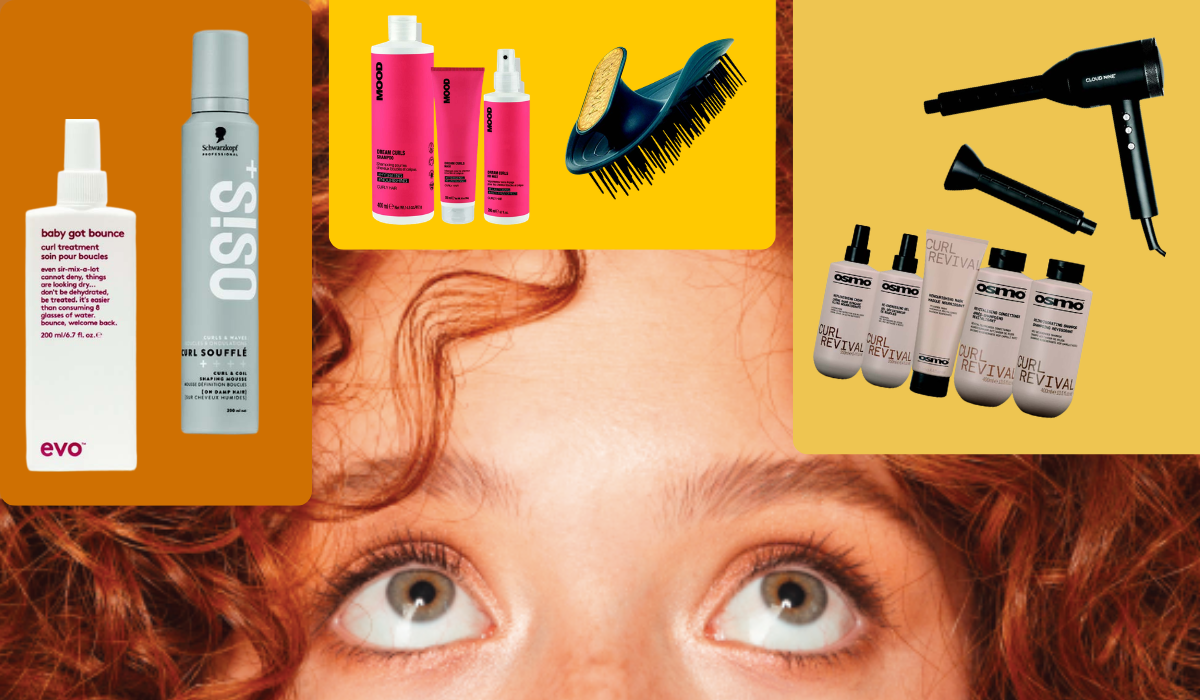
Dream Curls from Mood Haircare offers a dedicated treatment programme for curly clients. Formulated with fermented rice water, amino acids, vitamins and antioxidants, the products have been designed to provide intense hydration, elasticity and long-lasting curl definition. The lightweight ingredients allow for optimal curl retention, without causing frizz.
OSIS, SCHWARZKOPF PROFESSIONAL
Curl Soufflé from OSiS is a rich curl and coil shaping mousse, designed to deliver soft yet defined results while maintaining natural movement. The creamy formula enhances the hair’s natural curl pattern, while adding slip for a nourished, moisturised feel. It also helps to protect against humidity, tame frizz and provide heat protection up to 230°C.

MANTA
Designed with wider-spaced, longer and stronger bristles alongside a patented flexible base, the Manta Curls Soft Teal brush gently detangles wet or dry curls without causing breakage or disrupting the natural pattern. The brush also works to gently exfoliate and massage the scalp, helping to create the ideal foundation for healthy curl growth.
OSMO
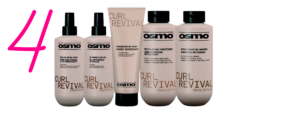
The Curl Revival Range from OSMO is a complete curl-enhancing system created to nourish, shape and protect natural waves, coils and curls of every kind. Designed to work with the hair’s natural texture, these moisture-rich formulas help to enhance definition, boost shine and provide long-lasting hold without crunch or heaviness.

EVO
Crafted to support the hair’s natural curl pattern, minimise frizz and prepare curls for easier styling, the baby got bounce curl treatment from evo repairs, treats and strengthens damaged and colour-treated curls. This rinse-out treatment uses Argan Oil and Shea Butter to deeply moisturise the hair and Hydrolysed Quinoa to protect and retain colour.

CLOUD NINE
Cloud Nine has launched the newest addition to its Airshot Pro hairdryer attachments – the Airshot Pro Volumisers. Crafted for a quicker, bouncier blow-dry, the new hairdryer attachments wrap the hair with a powerful airflow to create long-lasting, voluminous curls. The Ionic technology and personalised temperature control allows stylists to create big, blown-out curls without unnecessary damage.